
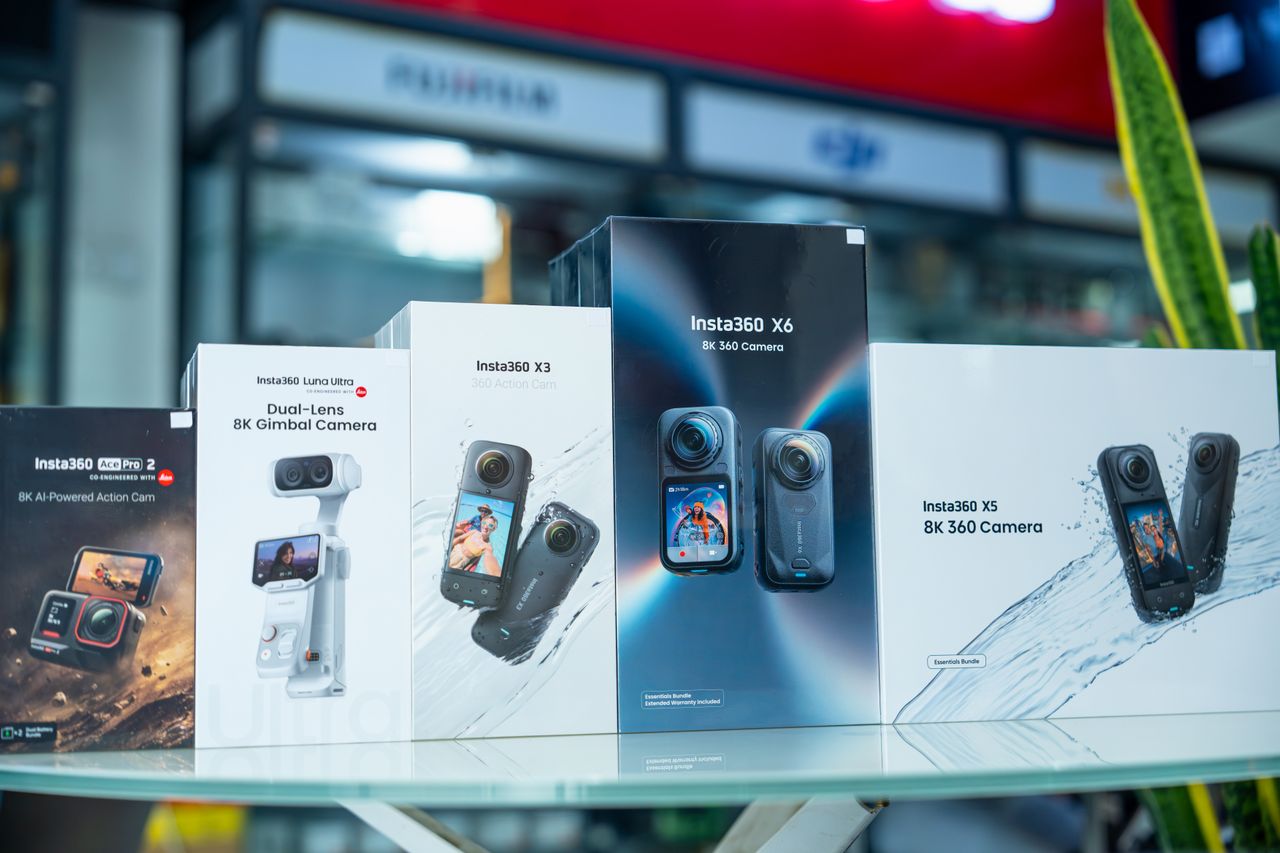
Resolution vs. Sensor Size: Demystifying Marketing Claims
Market offerings range from entry-level 720p units to devices advertising 8K at 240 FPS. However, focusing purely on resolution specifications often wastes hard-earned money:
- The Reality of Sensor Dimensions: Resolution indicates the total pixel count distributed across the sensor surface. Because action cameras demand a compact footprint, sensors are limited to small dimensions such as 1/1.3 or 1 inch. Cramming 33 million pixels (8K) onto a miniature sensor will not match the image depth, dynamic range, or low-light clarity of a full-frame sensor.
- Continuous Safety Recording: If the device serves primarily as a continuous road safety recorder, 1080p (Full HD) is more than sufficient. Higher resolutions generate massive file sizes, requiring expensive high-capacity memory cards and risking thermal throttling.
- Optimal Settings for Content Creation: For social media and online video platforms, 4K is the golden standard. It allows minor cropping, stabilization adjustments, or subtle zooming during editing without breaking down into pixelation, whereas zooming into 1080p footage by even 10 percent instantly degrades quality. Unless projecting footage onto cinema screens, 8K is completely unnecessary, especially since platforms like YouTube and Instagram compress uploads down to standard web formats.
Frame Rates (FPS) and the Pitfalls of Flat Log Profiles
Claims of 120 or 240 FPS are largely marketing focal points. Natural cinematic motion blur begins at 24 FPS, matching human visual perception. Extreme frame rates exist strictly for slow-motion playback, allowing footage to be slowed down up to ten times. Unless capturing closed-course stunt maneuvers in slow motion, standard road travel requires nothing beyond 24 or 60 FPS.
Similarly, shooting in flat Log color profiles preserves sensor dynamic range by capturing a washed-out image. However, unless dedicated to hours of post-production color grading in Adobe Premiere or DaVinci Resolve, native color profiles provide far greater practical utility for daily riders.
Evaluating 360-Degree Systems: Benefits and Compromises
Dual-lens 360-degree cameras capture complete spherical coverage around the motorcycle. However, their protruding convex lenses prevent the use of standard protective cages; a minor drop can shatter the lens and destroy the camera. Furthermore, reframing spherical video into widescreen formats demands extensive editing time and immense computer processing power to handle large data rates.
Mounting Clamps and High-Speed Structural Integrity
At elevated speeds, aerodynamic drag and mechanical vibrations require robust mounting solutions:
- Handlebar Clamps: Sturdy metal clamps mounted to handlebars or frame sliders anchor the camera securely, ensuring reliable stability through road imperfections.
- Helmet Chin Mounts: Chin straps fastened beneath the helmet visor deliver the most accurate point-of-view perspective, naturally following the rider's line of sight.
- Heavy-Duty Extension Poles: For third-person viewpoints, avoid fragile walking or cycling selfie sticks. High-speed riding demands heavy-duty carbon composite extension poles engineered to resist high wind resistance without snapping.
Motor Spotu Riding Advice
Action camera prices span wide budgets, and while entry-level units handle basic needs, their lack of robust stabilization makes license plates unreadable at speed. Still, buying the most expensive camera does not ensure great content or reliable protection. Assess your real-world requirements, secure your mounting hardware, ride defensively, and keep the rubber side down!